Collaborations
November 24, 2026
Building Science Together: Openshelf × Genspace
written by

Exploring open science, shared infrastructure and community-led innovation in New York City.
What happens when scientists, artists, designers, engineers and entrepreneurs share a laboratory?
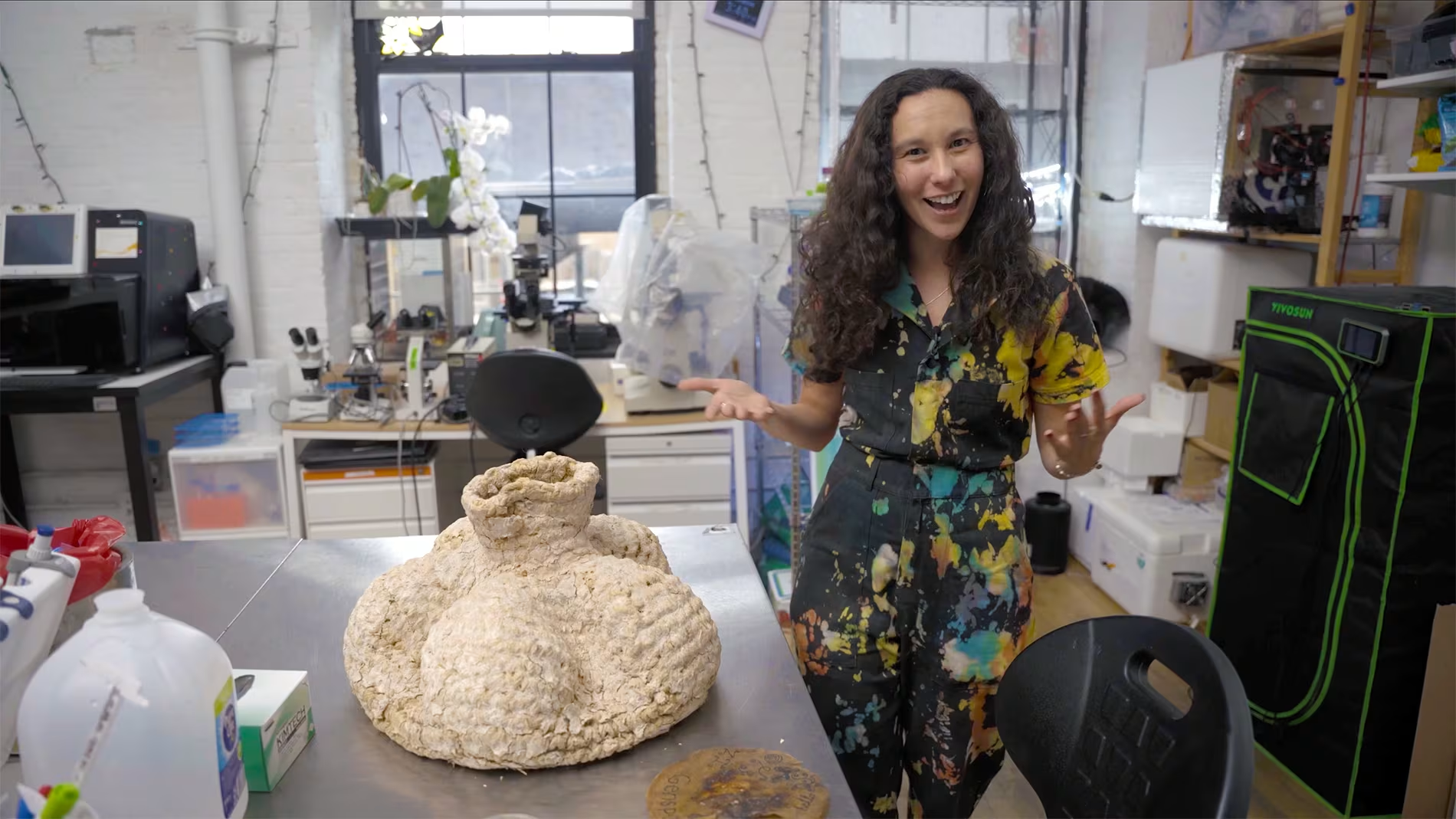
In Brooklyn, Genspace brings these communities together through a shared passion for biology. Its members are building open-source scientific instruments, developing sustainable biomaterials, exploring synthetic biology and finding new ways to understand our environment.
At Openshelf, we share a belief that the tools to do science should be accessible, adaptable and built around the people who use them.
Working with Genspace has been an opportunity to put these ideas into practice, right here in New York.
Walking through Genspace, it is difficult to put the laboratory into a single scientific discipline.
One group has built a Raman spectrometer using open-source designs and 3D-printed components. Another is exploring how bacteria can be used to grow cement. Members are extracting materials from locally sourced kelp, developing microbial pigments and building their own scientific instruments.
Artists have helped bring an old fluorescence microscope back to life. Community groups are building remotely controlled incubators, underwater drones and hydroponic systems.
What makes this environment particularly interesting is how these projects connect. Materials extracted by the algae group become starting materials for the biomaterials group. Knowledge, tools and resources move between disciplines.
It is a reminder of what becomes possible when people have access to the infrastructure to explore their ideas.
This diversity also comes with challenges.
Unlike a specialized research laboratory, Genspace needs to accommodate many different projects, materials and levels of scientific experience.
Some members are learning laboratory techniques for the first time. Others are developing their own research projects or building companies with limited resources.
How do you make materials accessible while ensuring that researchers have control over their own reagents? How do you keep track of what is available when people are constantly coming and going?
As Casey explains, even well-resourced academic laboratories struggle with shared inventory. In a community laboratory, inventory information also needs to be accessible to people who may not always know exactly what they are looking for.
These are not simply challenges of storage. They are challenges of designing infrastructure around people.
When the Genspace team first visited our workshop, we began exploring how automated inventory could support their laboratory.
Today, their Openshelf system has become part of the space and even has its own name: Libby, short for Library of Chemicals.
Members can search for chemicals, retrieve them automatically and track remaining quantities as materials are used.
For Auz, the value goes beyond the time saved searching for reagents.
Imagine spending three weeks preparing for a protein purification experiment, only to discover at a critical step that there is not enough of a chemical to continue.
Knowing what is in the laboratory is important. Knowing how much is available can be just as critical.
By connecting physical storage with digital inventory, we want to help scientists make better decisions before they begin an experiment.
[Video: Inside Genspace's Inventory with Auz]
One of our favorite parts of working with Genspace has been seeing how its members have made Openshelf their own.
When some of their chemical containers required larger storage boxes, members designed and 3D-printed boxes to accommodate them.
For us, this is what open and modular design is about. Technology should not be a fixed solution that laboratories have to work around. It should provide a foundation that people can adapt, extend and build upon.
Our passion for open-source technology comes from this belief. Sharing knowledge and creating opportunities for people to contribute can lead to better tools and new ideas.
We want to build laboratory infrastructure with the scientific community, not just for it.
Education is an important part of this story.
At Genspace, people are not only learning how to conduct experiments but also how to build the tools and environments that make those experiments possible.
Libby has become part of laboratory tours and safety training. Serena has also introduced Openshelf to educators across the international How to Grow Almost Anything synthetic biology course network.
We are excited to see automated laboratory infrastructure become part of the conversation about how we teach and learn science.
As new generations of scientists enter the laboratory, we want them to have the freedom to explore, experiment and develop their own ideas.
New York brings together scientific research, engineering, design, art and entrepreneurship. Genspace is a wonderful example of what can happen when these communities come together.
As a company building laboratory technology in New York, we are excited to be part of this ecosystem.
Thank you to Serena, Casey, Auz and the wider Genspace community for welcoming us into your laboratory, sharing your experiences and helping us shape what we build.
We look forward to continuing to build science together.
Keeping Inventory in Motion.
Discover more about Genspace at genspace.org.
Running a shared laboratory? Get in touch with Openshelf to explore how automated inventory can support your community.